
1st Amendment

17 8, 2017

On Civil Disobedience

By |2025-09-26T03:00:43+00:00August 17, 2017|1st Amendment, Constitutional Law, Criminal Justice, Legal Overviews|

A quick word to friends who are considering engaging in civil disobedience. Be prepared! If you disobey police orders, you are subject to arrest.

The police have broad power to enforce public order. During a protest, instigators are subject to arrest for “public order offenses” such as affray and disturbing the peace. Though the Boston Police tend not to arrest people in en-masse, if you repeatedly disobey an officer’s order, you will probably be arrested. (Note, State Police and Federal law enforcement agencies tend to be more aggressive).

More on resisting arrest… the Massachusetts Model Jury Instructions state:

“A person commits the crime of resisting arrest if he knowingly prevents or attempts to prevent a police officer . . . from effecting an arrest of [himself] or another [Read More…]
5 3, 2014

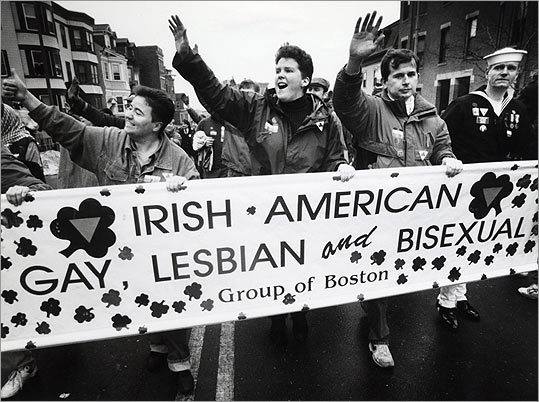
St. Patrick’s Day Parade LGBT Controversy

By |2020-11-01T17:38:15+00:00March 5, 2014|1st Amendment, LGBT Rights|

In light of the still-ongoing controversy regarding LGBT groups’ efforts to march in Boston’s St. Patrick’s day parade, I’d like to revisit the 1995 Supreme Court case that upheld the parade organizers’ right to exclude such groups.

The St. Patrick’s day parade has a long history in Boston. The City of Boston was the official sponsor of the parade until 1947, at which point Mayor Curley granted authority over the parade to the South Boston Allied Veterans War Council, a group of individuals from various South Boston veterans groups. Nonetheless, the City continued to fund the parade, and allowed parade organizers to use the City seal until 1992.

In 1992, a group of Boston residents formed the Irish-American Gay, Lesbian and Bisexual Group of Boston (GLIB). [Read More…]

Go to Top